
Roller Mill vs Ball Mill for Kaolin Grinding Energy Efficiency Comparison
If you’re in the kaolin processing industry, you know that grinding isn’t just a step—it’s the foundation for achieving the right particle size, purity, and performance in your final product. But when it comes to choosing between a roller mill vs ball mill for grinding kaolin, which fits your operation best? Each offers distinct advantages depending on your production goals, energy concerns, and product specs. In this post, you’ll get a clear, no-nonsense comparison to help you decide which mill maximizes efficiency and quality for your kaolin grinding needs.
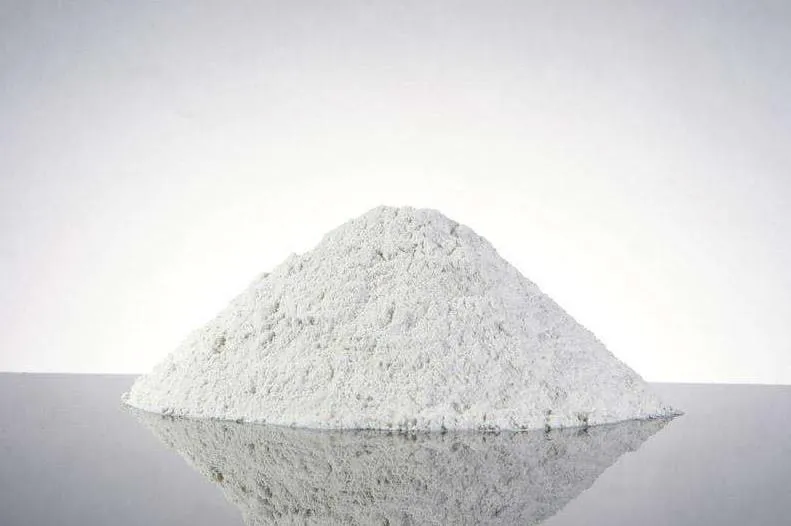
Understanding Kaolin Grinding Requirements
When choosing kaolin grinding equipment, it’s vital to understand the specific properties and processing needs of kaolin. This natural mineral is prized for its softness, high whiteness, plasticity, and low abrasiveness, which shape how it is milled.
Key Kaolin Properties:
- Softness: Enables easier grinding with less wear on equipment.
- Whiteness: Crucial for paper and ceramics, so contamination must be minimized.
- Plasticity: Influences particle shape and milling method.
- Low Abrasiveness: Reduces media wear and maintenance costs.
Particle Size Needs for Kaolin
Kaolin’s applications demand various particle sizes. For example:
| Application | Typical Particle Size (µm) |
|---|---|
| Paper fillers | 45 – 150 |
| Paint and coatings | 10 – 100 |
| High-end ceramics | < 10 (ultra-fine powder) |
Control over kaolin particle size distribution is crucial. Too coarse, and the material won’t perform; too fine, and processing costs rise.
Key Grinding Challenges
- Avoiding contamination: Iron from grinding media or mill parts can stain and reduce kaolin quality.
- Controlling particle distribution: Uniform particle size improves product performance.
- Managing moisture: Kaolin often contains moisture, affecting grinding efficiency and product dryness.
Understanding these factors helps select the best grinding system — whether it’s a ball mill kaolin processing setup or a vertical roller mill kaolin design tailored to moisture and fineness demands.
This solid grasp of kaolin properties and grinding challenges is the foundation for matching energy efficient kaolin milling equipment to your production goals.
How Ball Mills Work for Kaolin Grinding
Ball mills grind kaolin by using impact and attrition. Inside a rotating drum, steel or ceramic balls tumble and crush the kaolin particles. This action breaks down the material to the desired size. The process typically starts with feeding raw kaolin into the mill. As the drum spins, the grinding media grind the kaolin continuously.
After grinding, the material often moves to a classification stage where particles are separated by size. Finer kaolin goes forward while coarser lumps return to the mill for regrinding. This closed-circuit setup helps achieve consistent kaolin powder fineness.
Ball mill kaolin processing setups can be either wet or dry. Wet grinding uses water or liquid to help reduce dust and improve grinding efficiency, which is common in ceramics kaolin grinding for smooth, ultra-fine particles. Dry grinding suits applications needing minimal moisture, like paper coating kaolin mills.
Overall, ball mills are widely used in kaolin grinding because they are simple, reliable, and effective for producing a range of kaolin particle size distributions. However, power consumption and contamination from grinding media can be concerns depending on the setup.
How Roller Mills (Vertical Roller Mills) Work for Kaolin Grinding
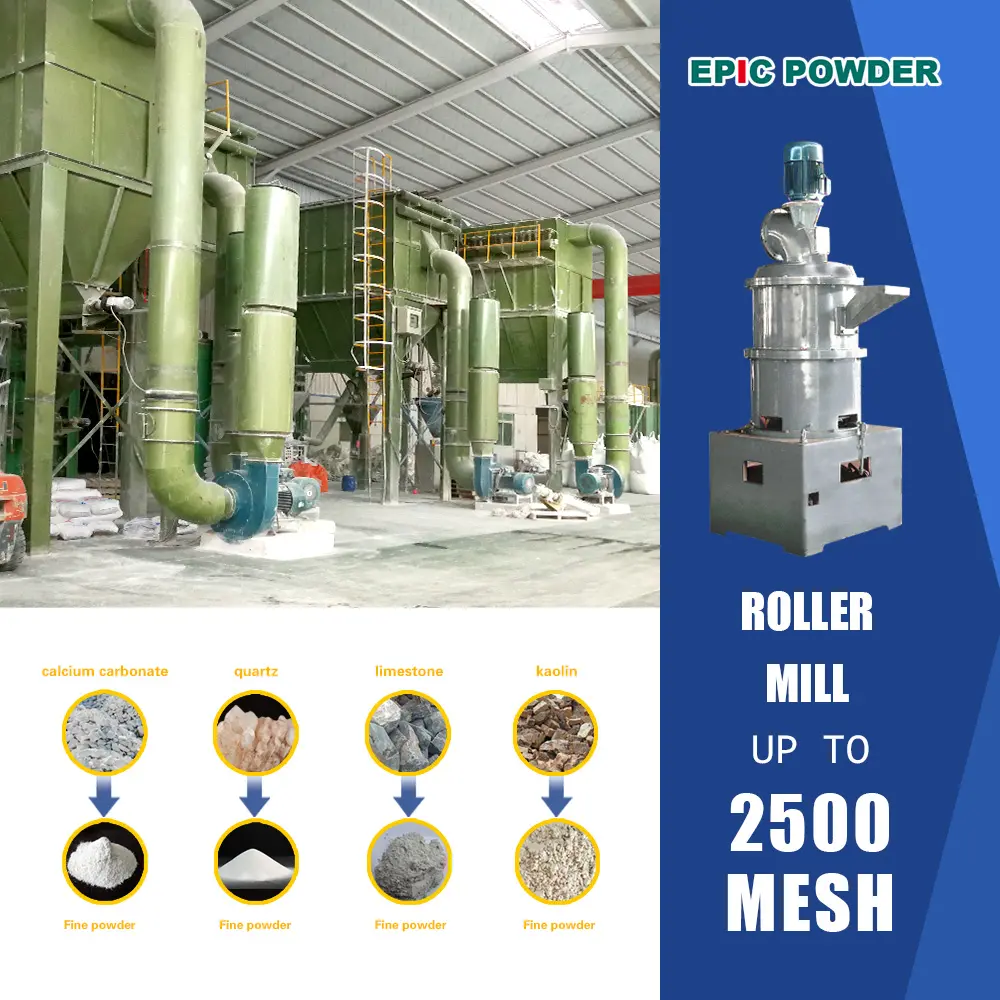
Roller mills, especially vertical roller mills (VRMs), grind kaolin by compressing and shearing the material between heavy rollers and a rotating grinding table. This method crushes the kaolin gently but efficiently, producing consistent particle size with less energy than traditional mills.
One major benefit of vertical roller mills is their ability to combine grinding, drying, and classification in a single machine. Since raw kaolin often contains moisture, integrated drying helps reduce feed water content during grinding, improving the overall process and reducing the risk of clumping.
Vertical roller mills handle moist feeds better than ball mills, making them ideal for kaolin grinding where moisture management is crucial. Their design also supports achieving finer particle size distribution with less contamination, important for high-purity kaolin used in ceramics, paper coating, and other industries.
In short, vertical roller mills for kaolin grinding offer energy-efficient processing with built-in drying and classification, all while maintaining product quality and managing moisture in an industrial mineral grinding setup.
Direct Comparison: Roller Mill vs Ball Mill for Kaolin Grinding
When choosing between a roller mill vs ball mill for grinding kaolin, several factors come into play—energy use, output quality, capacity, and maintenance among them. Here’s a clear-cut comparison to help you decide.
| Feature | Roller Mill (Vertical Roller Mill) | Ball Mill |
|---|---|---|
| Energy Efficiency | High efficiency; uses less power per ton due to compression grinding | Lower efficiency; impact grinding needs more energy |
| Particle Size & Fineness | Better control, produces consistent ultra-fine kaolin powder | Good for coarse to fine grinding but less uniform particle size |
| Production Capacity | Higher throughput, ideal for large-scale operations | Moderate capacity; suited for smaller batches |
| Contamination Risk | Low risk; wear parts use low-iron alloys to reduce contamination | Higher risk; steel balls may introduce iron contamination |
| Maintenance & Wear | Lower wear rates; easier maintenance with fewer moving parts | Higher wear rates on liners and grinding media; higher maintenance costs |
| Footprint & Installation | Compact design; lower civil engineering costs | Larger footprint; requires stronger foundations |
| Noise & Dust Emission | Quieter operation; integrated dust control systems | Noisier; often needs additional dust control measures |
| Drying Capability | Built-in drying function, handles moist kaolin efficiently | Typically no drying; prefers dry feed or needs separation preprocessing |
- Energy Efficiency: Roller mills excel in energy saving, cutting down power bills.
- Fineness & Particle Distribution: Roller mills deliver finer, more uniform kaolin powder—perfect for ceramics and paper coatings needing precise particle sizes.
- Capacity: For high volume kaolin production, roller mills scale better.
- Contamination: Ball mills risk iron contamination from media, problematic for high-purity kaolin. Roller mills minimize this.
- Maintenance: Ball mills demand more upkeep, increasing operating costs.
- Installation: Roller mills save space and installation hassle.
- Environmental Impact: Roller mills produce less noise and dust.
For grinding kaolin powder at scale, with quality and cost-efficiency in mind, the vertical roller mill often outperforms traditional ball mills—especially when moisture and contamination control are critical.
Advantages and Disadvantages of Ball Mill vs Roller Mill for Kaolin
When deciding between a ball mill and a roller mill for kaolin grinding, it’s important to weigh their strengths and limitations based on your specific needs.
Ball Mill Strengths for Kaolin
- Fine and uniform grinding: Ball mills excel at producing ultra-fine kaolin powder with consistent particle size distribution, which is key for high-end ceramics and paper coating.
- Versatility: Can handle both wet grinding and dry grinding, offering flexibility for different kaolin moisture levels.
- Simple operation: Proven technology, easy to operate and maintain in many kaolin processing plants.
- Low contamination risk with quality media: Using ceramic or coated grinding media reduces iron contamination risks.
Ball Mill Limitations for Kaolin
- High energy consumption: Ball mills typically use more power, affecting operational costs.
- Lower throughput: Production capacity can be limited compared to roller mills, which may slow down large-scale kaolin projects.
- Wear and maintenance: Grinding media and liners wear faster, leading to higher maintenance and downtime.
- Large footprint: Requires more space and heavier civil infrastructure.
Roller Mill Strengths for Kaolin
- Energy efficient grinding: Vertical roller mills consume less power, reducing overall energy costs in kaolin milling.
- Integrated drying and grinding: Handles moisture-rich kaolin feed well by combining drying and grinding in one process.
- Higher production capacity: Supports larger throughput with consistent particle size control, ideal for industrial mineral grinding.
- Lower contamination risk: Wear parts are made from special alloys, minimizing iron contamination.
- Compact design: Smaller footprint and easier to install in modern kaolin processing plants.
Roller Mill Limitations for Kaolin
- Less uniform ultra-fine output: Achieving ultra-fine sizes below 45 µm can be more challenging compared to ball mills.
- Complex maintenance: Requires skilled technicians for upkeep and replacement of roller parts.
- Higher initial investment: Capital costs for vertical roller mills can be higher, impacting upfront budget.
- Not ideal for very hard materials: While kaolin is soft, roller mills may struggle with materials of varying hardness mixed in.
Side-by-Side Comparison Table
| Feature | Ball Mill for Kaolin | Roller Mill for Kaolin |
|---|---|---|
| Particle Size Range | Ultra-fine (down to ~5 µm) | Fine to medium-fine (45 µm+) |
| Energy Consumption | Higher | Lower |
| Moisture Handling | Wet & dry, limited drying | Excellent, integrated drying |
| Production Capacity | Moderate | High |
| Contamination Risk | Medium (depends on media) | Low |
| Maintenance Costs | Higher | Moderate to high |
| Installation Footprint | Large | Compact |
| Operating Complexity | Simple | More technical |
| Suitable Applications | Ceramics, coatings needing ultra-fine powder | Large-scale filler production, paper coating |
In , ball mills are best for ultra-fine kaolin powder with moderate capacity, while roller mills are ideal for energy-efficient, high-volume kaolin grinding with integrated drying. Your choice depends on your product requirements, energy goals, and budget.
Real-World Applications and Case Studies
When it comes to kaolin grinding, ball mills have long been the go-to equipment in traditional processing plants. Their simple design and reliable performance make them ideal for producing consistent kaolin powder, especially in small to medium-scale operations. Ball mills excel in wet grinding setups, often used in ceramics production where ultra-fine kaolin powder is needed. Many ceramic manufacturers still rely on ball mill kaolin processing because it offers good control over particle size distribution and helps achieve the desired whiteness and plasticity levels in the final product.
On the other hand, roller mills—particularly vertical roller mills—are becoming the preferred choice for modern, high-volume kaolin operations. Their integrated grinding, drying, and classification capabilities make them highly efficient for handling moist feeds, reducing contamination risks, and improving energy efficiency. Industries like paper coating have embraced roller mill kaolin grinding equipment because it delivers uniform particle fineness crucial for high-quality coatings. Plus, the lower maintenance and operational costs improve overall productivity.
Examples from Industry:
- Ceramics: Ball mills continue to be popular for ultra-fine ceramic kaolin powder manufacturing, where precise particle control is critical.
- Paper Industry: Vertical roller mills dominate large-scale paper coating kaolin grinding lines due to their ability to process high moisture content and produce uniform particle size at high throughput.
In , ball mills fit well in traditional, smaller setups focusing on fine control and purity, while roller mills serve large-scale, energy-efficient kaolin production with faster output and less contamination risk. Both have proven records in delivering quality kaolin powder tailored to industry needs.
Factors to Consider When Choosing for Kaolin Grinding
Choosing the right equipment for kaolin grinding depends on several key factors to meet your production goals efficiently.
Feed Material Characteristics
- Moisture content: High moisture kaolin suits roller mills better thanks to their drying capabilities. Ball mills often require dryer feed or additional drying steps.
- Hardness and abrasiveness: Although kaolin is generally soft, variations may affect wear rates and influence whether a ball mill or vertical roller mill kaolin setup is more durable.
Desired Output Fineness and Volume
- For ultra-fine kaolin powder, ball mills can offer finer control, but modern roller mills achieve ultra-fine grinding with less energy.
- Consider your production capacity needs—roller mills usually handle higher throughput with consistent particle size distribution.
Energy Costs and Sustainability Goals
- Roller mills are known for energy efficient kaolin milling, lowering power consumption compared to traditional ball mills.
- If sustainability is a priority, roller mills reduce carbon footprint through less energy use and integrated drying.
Budget (Capital vs. Operating)
- Ball mills may have lower upfront costs but generally incur higher maintenance and mill operating costs over time.
- Roller mills typically need a larger initial investment but shine with lower energy bills and reduced wear on parts.
Integration With Existing Plant Setup
- Space limitations and existing mill types affect your choice. Roller mills often require different foundations and civil work compared to ball mills.
- If upgrading a kaolin grinding equipment line, matching the new mill with current classifiers, feeders, and conveyors is essential for smooth integration.
Taking these factors into account helps you pick a grinding solution optimized for your kaolin’s properties, desired output, and operational goals.
Epic Powder Solutions for Kaolin Grinding
At Epic Powder, we understand the challenges of kaolin grinding — from controlling particle size distribution to reducing contamination and managing moisture. Our advanced vertical roller mill kaolin solutions are designed specifically for these needs, offering superior performance and reliability.
What We Offer
- Advanced Roller Mills: Our roller mills combine grinding, drying, and classification in one compact system. This means better control over kaolin powder fineness and efficient handling of wet or sticky feeds.
- Complementary Equipment: Alongside our mills, we provide feeders, classifiers, and dust collection units tailored for kaolin processing, ensuring minimal product loss and high purity.
- Customised Systems: We design setups to suit your volume and fineness requirements — perfect for ceramics, paper coating, or industrial mineral grinding.
How Epic Powder Meets Kaolin Grinding Needs
| Challenge | Our Solution | Benefit |
|---|---|---|
| Moisture in feed | Integrated drying within roller mill | Handles raw/wet kaolin smoothly |
| Contamination risk | Low-wear parts and non-metallic liners | Reduces iron contamination |
| Energy consumption | Energy-efficient roller mill design | Cuts power costs significantly |
| Particle size control | Precise classification system | Consistent, ultra-fine kaolin powder |
| Production capacity | High throughput capacity options | Fits small to large industrial setups |
Why Choose Epic Powder?
- Efficiency: Lower power use means your plant runs sustainably and cost-effectively.
- Purity: Our low-contamination design keeps your kaolin clean, vital for high-end applications like ceramics and paper.
- Scalability: Whether you’re processing limited batches or large volumes, our equipment scales with your business.
- Support: We provide global after-sales service, maintenance plans, and upgrades tailored to your operation.
With Epic Powder’s kaolin grinding roller mill, you get a smart, reliable solution that meets global quality standards while reducing operating costs. If you’re looking to upgrade your maintenance costs and boost performance, our roller mill technology is a proven choice worldwide.

“Thanks for reading. I hope my article helps. Please leave a comment down below. You may also contact EPIC Powder online customer representative Zelda for any further inquiries.”
— Posted by Emily Chen, Senior Engineer

