
How to Choose the Right Ring Roller Mill for Talc Production
If you’re aiming to produce top-quality talc powder, choosing the right ring roller mill for talc production is absolutely essential. Grinding talc isn’t like processing harder minerals—its softness and platelet structure demand precision equipment to maintain purity, brightness, and efficiency. Picking the wrong mill can mean costly setbacks in product quality and operational performance. In this guide, you’ll discover exactly how to align your talc’s unique properties and production goals with the right mill technology, ensuring smooth operations and superior results. Let’s get straight to the point and make your talc milling process flawless!
Why Mill Selection is Critical for Talc Quality
The Unique Challenges of Grinding Soft, Platelet Talc
Talc is a remarkably soft mineral, characterized by its distinctive platelet-like structure. This softness and flaky form present a unique challenge in milling. Unlike harder minerals, talc’s delicate platelets can easily be damaged or fragmented inappropriately if the grinding process is too aggressive. This can alter the mineral’s natural properties, affecting flowability and particle shape, which are critical for many applications. Selecting the right ring roller mill, specifically designed to handle soft, platelet talc, ensures minimal structural disruption during grinding, preserving talc’s softness and laminar form.
How the Wrong Mill Impacts Purity, Whiteness, and Efficiency
Using an unsuitable mill for talc production can have severe consequences on product quality and operational efficiency. Incorrect milling can introduce contamination, especially iron particles, compromising purity and reducing the brightness of the final powder. This is critical for industries requiring ultra-white talc, such as plastics, paints, and cosmetics. Additionally, an improperly chosen mill may lead to inconsistent particle size distribution, reducing product performance and market value. It may also increase power consumption and maintenance needs, driving up production costs. Therefore, selecting the right ring roller mill is essential to maintain talc purity, maximize whiteness, and achieve efficient, cost-effective grinding.
Define Your Starting Point: Key Talc Material Properties
Hardness and Structure: Implications for Grinding Mechanics
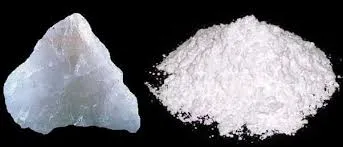
Talc is soft (Mohs hardness around 1), but its platelet structure means it flakes easily. This softness calls for a mill that gently presses rather than violently smashes particles, preserving platelet integrity. The ring roller mill is ideal because its roller pressure grinds efficiently without excessive shear, reducing fines and preserving particle shape.
| Property | Effect on Grinding |
|---|---|
| Mohs Hardness 1 | Low wear, less energy needed |
| Platelet Structure | Requires gentle roller pressure |
| Fragile flakes | Avoid impact mills to reduce dust |
Purity & Brightness: Defining Contamination Control Needs
Talc’s value often depends on its purity and brightness. Iron contamination can darken the powder and reduce quality, especially for premium markets like cosmetics or paints. Choose mills with wear-resistant materials like ceramic liners and non-ferrous components to minimize contamination. Also, choose mill designs that allow easy cleaning and have minimal metal-to-talc contact.
Feed Size and Moisture Content: Pre-processing Requirements
Talc feed size and moisture affect milling performance and final product quality. Oversized lumps might clog or slow rollout, while moisture above 2-3% can cause agglomeration and stickiness. Pre-processing like crushing, screening, and drying might be needed.
| Feed Parameter | Ideal Range | Notes |
|---|---|---|
| Feed size | <15 mm | Prevents mill clogging |
| Moisture | <3% | Avoids powder sticking and caking |
Proper feed preparation ensures steady mill operation and consistent talc fineness. For more on grinding efficiency and media selection, check how different types of grinding media balls impact results.
Specify Your End Goal: Final Product Requirements
Target Fineness (D50, D97) and Particle Size Distribution
Knowing your target fineness is key for choosing the right ring roller mill for talc production.
- D50 represents the median particle size you want — half of the particles are finer than this.
- D97 shows how fine your finest particles should be — 97% smaller than this size.
These metrics influence the mill’s classifier settings and grinding pressure. Consistent particle size distribution ensures product quality, process stability, and better performance in end-use applications like plastics or coatings.
Required Production Capacity (Tons Per Hour)
Your plant’s capacity determines the ring roller mill’s scale and power requirements.
- Small to medium operations might need 1–5 tons per hour.
- Large-scale producers may target 20+ tons per hour.
Matching mill capacity to production targets prevents bottlenecks and avoids overspending on oversized equipment.
| Capacity | Mill Size | Notes |
|---|---|---|
| < 5 TPH | Small ring roller mill | Flexible, lower cost |
| 5-20 TPH | Medium ring roller mill | Balanced output and cost |
| > 20 TPH | Large, industrial mill | High throughput required |
Special Needs: Low Iron, High Brightness, or Low Temperature
Certain end-user demands require tuned mill features:
- Low Iron Contamination: Use ceramic or specially coated rollers and liners to protect brightness and purity, critical in pharmaceutical or cosmetic talc.
- High Brightness: Minimize heat and abrasion during grinding with advanced roller pressure control and classifier precision.
- Low Temperature Processing: Avoid heat buildup that could degrade talc quality by choosing mills with good cooling designs or lower power density.
Ensuring these special requirements will directly impact product marketability and customer satisfaction.
For more examples on achieving precise fineness and controlling product quality, see our guide on producing ultra-fine barite powder with ring roller mill.
Core Technical Factors in Ring Roller Mill Selection
Grinding Mechanism: Why Roller Pressure Suits Talc
Talc is soft and has a platy structure, which means it benefits from a grinding mechanism that applies consistent pressure without crushing it harshly. Ring roller mills use high-pressure rollers that gently pulverize talc, preserving particle integrity and enhancing whiteness. This method reduces the chance of overgrinding, which can damage the mineral’s natural properties and affect quality.
Material of Construction: Ensuring Purity and Wear Resistance
The mill’s construction materials directly impact talc purity. Stainless steel or ceramic-lined rollers and shells are best because they prevent iron contamination, which dulls brightness. Wear-resistant materials help maintain consistent grinding performance and reduce maintenance downtime. Choosing a mill with carefully selected lining materials keeps your product grade high without frequent replacements.
Classifier System: Integrated vs. External for Target Fineness
Ring roller mills often come with integrated classifiers that allow precise control of particle size distribution (PSD). Integrated classifiers streamline operations and help reach tight fineness targets like D50 and D97 more efficiently. External classifiers offer flexibility for different applications but may complicate the system and increase footprint. Pick based on your product specs and space constraints.
| Feature | Integrated Classifier | External Classifier |
|---|---|---|
| Precision | High | Variable |
| Space Requirement | Compact | Larger |
| Complexity | Lower | Higher |
| Maintenance | Easier | More involved |
Energy Efficiency: Comparing Power Consumption Metrics
Energy cost is a major factor in ring roller mill selection. Look for mills designed with optimized roller pressure and airflow to reduce power draw per ton of talc processed. Efficient mills provide consistent output while minimizing downtime and electrical bills. Checking power consumption data from suppliers helps you estimate operational costs realistically.
Automation & Control: Consistency and Ease of Operation
Modern ring roller mills come equipped with automation systems that monitor critical parameters like roller pressure, feed rate, and classifier speed. These controls ensure steady product quality and simplify adjustments for different talc grades. Automation reduces human error and downtime, making operations smoother, especially for high-capacity or multi-product plants.
For more insights on advanced ring roller mill designs and performance, check out our detailed roller mill machinery resources.
Evaluating Manufacturers and Verifying Performance
Supplier Expertise: Requesting Talc-Specific Case Studies
When choosing the right ring roller mill for talc production, supplier expertise is a top priority. Ask for talc-specific case studies that demonstrate proven success in grinding this delicate mineral. Experienced manufacturers will showcase projects where they tackled challenges like maintaining talc purity and achieving precise particle size distribution. Reviewing these case studies helps ensure they understand the unique properties of soft, platelet talc and can deliver consistent results aligned with your quality standards.
The Non-Negotiable Step: Insisting on a Grinding Test with Your Material
Never skip a grinding test using your own talc sample before finalizing any purchase. This test is crucial—it shows how the mill handles your specific feed size, moisture, and structure, and whether it meets your particle size and purity targets. Seeing actual performance data eliminates guesswork, helps optimize mill settings, and confirms the equipment can produce your desired product quality and throughput. It’s your best assurance for a smooth transition from installation to full production.
After-Sales Support: Assessing Service and Parts Availability
Reliable after-sales support is just as important as upfront mill capabilities. Check whether the manufacturer provides swift access to spare parts, technical advice, and maintenance services tailored for ring roller mills used in talc grinding. Good support minimizes downtime and keeps operations running efficiently. A strong service network and responsive customer care make a big difference in maintaining continuous production and protecting your investment over the long haul.
For further insight into grinding technologies and energy-efficient solutions, you might explore resources like the detailed applications of ring roller mills in mineral processing.
Making the Financial Decision: Total Cost of Ownership
Looking Beyond the Initial Purchase Price
When choosing the right ring roller mill for talc production, it’s crucial to look past the upfront cost. The initial purchase price might seem attractive, but it’s only one part of the equation. Consider how the mill’s efficiency, durability, and ease of maintenance affect your long-term budget. A mill that’s cheap to buy but breaks down often or requires frequent repairs can quickly become a costly burden.
Calculating Operational and Maintenance Costs
Operational costs like power consumption, wear parts replacement, and labor should be a significant factor in your decision. Ring roller mills that offer energy-efficient grinding mechanisms reduce electricity bills. Also, mills built with wear-resistant materials minimize downtime and part replacement expenses. Don’t forget to factor in maintenance frequency—simpler designs with accessible components save both time and money.
ROI of Quality: Premium Product Yield and Stable Operation
Investing in a high-quality ring roller mill pays off through higher yields of premium-grade talc, meeting tight specifications for fineness, purity, and brightness. Stable operation reduces variability in product quality, which protects your reputation and allows you to command better prices. In the long run, calculating ROI means weighing not just cost savings but also how improved product quality and operational consistency boost your profitability.
For a better understanding of advanced grinding systems that enhance quality while controlling costs, you might find this comparison of fine and micro powder production techniques insightful: the difference between white corundum fine powder and micro powder.
Questions from Talc Producers: Answered by Epic Powder Experts
Q: Can one mill handle both coarse (200 mesh) and ultra-fine (2500 mesh) talc for different product lines?
Yes, a well-designed ring roller mill can handle a broad range of particle sizes, from coarse 200 mesh to ultra-fine 2500 mesh talc. The key is in the mill’s adjustable grinding pressure and an efficient classifier system that can be tailored to meet different target fineness and particle size distributions. For example, mills equipped with advanced air classifiers allow quick switching between coarse and superfine grinding without compromising efficiency or product quality. This flexibility supports multiple product lines using a single mill, which streamlines operations and reduces capital costs. For detailed insights on achieving superfine talc powders, exploring our guide on high-efficiency roller mills for superfine powder up to 2500 mesh provides practical tips.
Q: How do you prevent iron contamination to protect the brightness of premium-grade talc?
Iron contamination is a major concern because it directly affects the purity and whiteness of talc. To minimize this risk, choosing a ring roller mill made with ceramic-lined or specialized non-ferrous materials in critical grinding parts is essential. These materials resist wear better and prevent iron particles from entering the product. Regular maintenance and careful inspection of grinding components also help detect any wear before contamination occurs. Additionally, ensuring the mill operates at optimal pressure and speed reduces metal abrasion. For a closer look at controlling impurities and achieving high brightness levels, the Astra air classifier production line used in mineral processing offers useful parallels.
Success in Action: An Epic Powder Machinery Case Study
Client Profile: A Southeast Asian Manufacturer Targeting the Plastics and Coatings Market
A leading manufacturer in Southeast Asia, specializing in high-quality talc powders for plastics and coatings, approached Epic Powder to modernize their grinding process. Their goal was to produce ultra-fine, consistent talc suitable for premium applications while minimizing contamination risks.
The Challenge: Upgrading from an outdated system to achieve consistent D97 < 15μm without contamination
The client’s existing mill system struggled with inconsistent particle size distribution and frequent iron contamination, negatively impacting the talc’s whiteness and purity. They needed a solution that could reliably produce talc with a D97 finer than 15μm — a key specification for their product line — while enhancing efficiency and reducing energy use.
The Epic Solution: Installation of a Customized Ring Roller Mill with Ceramic-Lined Components
Epic Powder designed and installed a tailor-made ring roller mill featuring ceramic-lined grinding zones to minimize wear and prevent iron contamination. This grinding mechanism applies uniform roller pressure ideal for soft, platelet talc. To help meet fineness targets precisely, an advanced classifier system was integrated. This setup ensured high purity and consistent particle size, all while keeping power consumption in check. For further insights on similar vertical mill technologies, visit our detailed page on the calcium carbonate vertical roller mill.
The Result: 30% Increase in Yield of Premium-Grade Powder and a 20% Reduction in Energy Cost per Ton
Following installation, the manufacturer saw a significant boost in output quality and quantity. Premium-grade talc yield increased by 30%, thanks to more precise grinding and less contamination. At the same time, energy costs dropped by 20% per ton processed, making operations more sustainable and profitable. This case perfectly illustrates how selecting the right ring roller mill can transform talc production efficiency and product quality.
Epic Powder
At Epic Powder, we offer a wide range of equipment models and tailor solutions to meet your specific needs. Our team has more than 20 years experience in various powders processing. Epic Powder is specialized in fine powder processing technology for mineral industry, chemical industry, food industry, pharama industry, etc.
Contact us today for a free consultation and customized solutions!

“Thanks for reading. I hope my article helps. Please leave a comment down below. You may also contact EPIC Powder online customer representative Zelda for any further inquiries.”
— Jason Wang, Senior Engineer

