The Complete Guide to Barite Grinding: How to Choose the Right Roller Mill for Your Business
Barite is one of the most important non-metallic minerals in the world. Its high density, chemical inertness, and whiteness make it valuable across many industries. From oil and gas drilling to paints, plastics, and even medical applications, barite powder is everywhere. However, to unlock its full potential, you need the right grinding equipment. The quality of your barite powder—its fineness, purity, and consistency—directly affects its market value and your profitability. In this guide, we will walk you through the main uses of barite, how to choose a grinding mill, and why a ring roller mill like Epic Powder’s SRM series is the ideal solution for producing high-value barite powder.
What Is Barite and Why Is It Important?
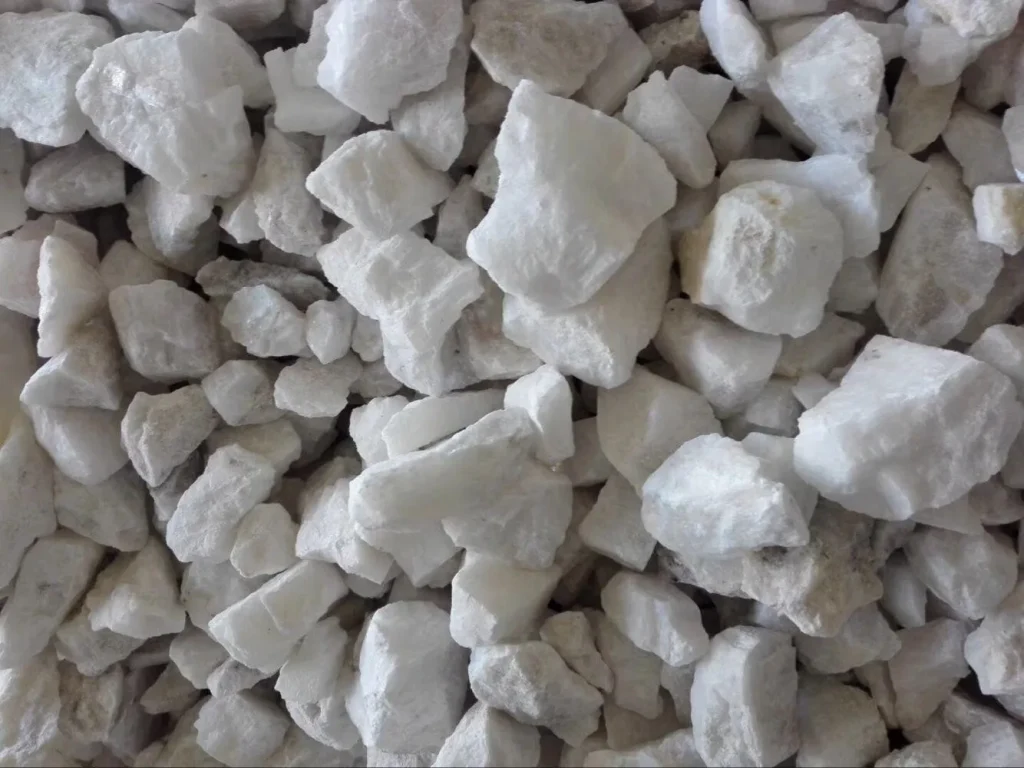
Barite, also known as barium sulfate (BaSO₄), is a heavy mineral with a specific gravity of 4.2 to 4.5. This high density is its most valuable property and the reason it is so widely used in industry. Approximately 70 to 80 percent of all barite is used as a weighting agent in oil and gas drilling mud. The heavy powder increases the mud’s density, helping to control formation pressure and prevent blowouts during drilling operations.
Beyond drilling, barite powder has many other applications. In paints and coatings, it is used as a filler because it is chemically inert and improves gloss, smoothness, and durability. In plastics and rubber, it acts as a functional filler that increases density and improves wear resistance. The medical industry uses high-purity barite as a contrast agent for digestive tract X-rays. Barite is also a raw material for producing barium carbonate, barium chloride, and other barium compounds used in glass, ceramics, and fireworks. Additionally, barite aggregate is used in concrete to shield against X-rays and gamma radiation in medical and industrial facilities.
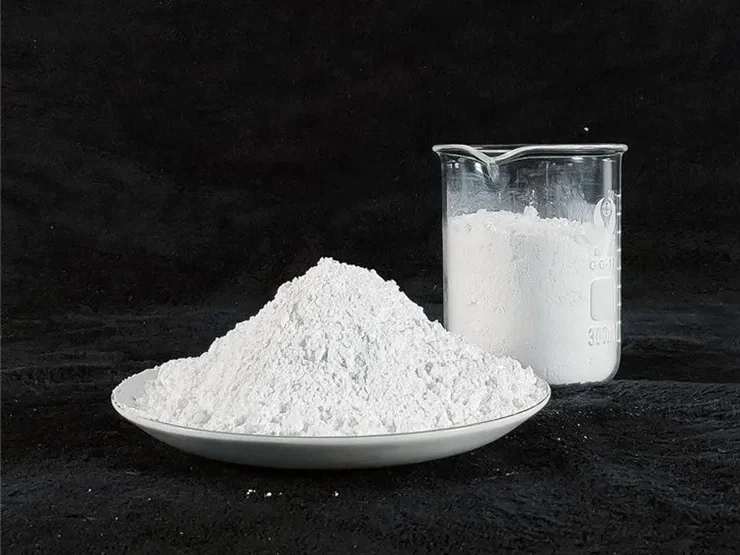
The market value of barite powder depends heavily on its fineness and purity. Coarse powder around 200 mesh is suitable for drilling mud and basic fillers. However, ultrafine powder of 1250 mesh and above commands a much higher price and is used in premium paints, high-performance plastics, and other high-tech materials. For businesses looking to maximize profitability, producing ultrafine barite powder is often the best strategy.
Why the Right Grinding Mill Matters
To produce barite powder that meets market demands, your grinding system must be efficient, versatile, reliable, and clean. Efficiency means low energy consumption per ton of product, which directly impacts your operating costs. Versatility means the ability to produce both coarse and ultrafine powder from the same equipment, giving you flexibility to serve different markets. Reliability means minimal downtime for maintenance, ensuring consistent production. Clean operation is also essential, as modern environmental regulations require dust-free operation to protect workers and the surrounding environment.
Traditional grinding mills like ball mills, impact mills, and jet mills often fall short in one or more of these areas. Ball mills consume high amounts of energy and require large floor space. Jet mills can produce ultrafine powder but have high energy consumption and limited capacity. Impact mills may struggle with consistent fineness and generate more dust. For barite processors looking to achieve both quality and efficiency, a ring roller mill offers distinct advantages.
The SRM Ring Roller Mill: A Better Way to Grind Barite
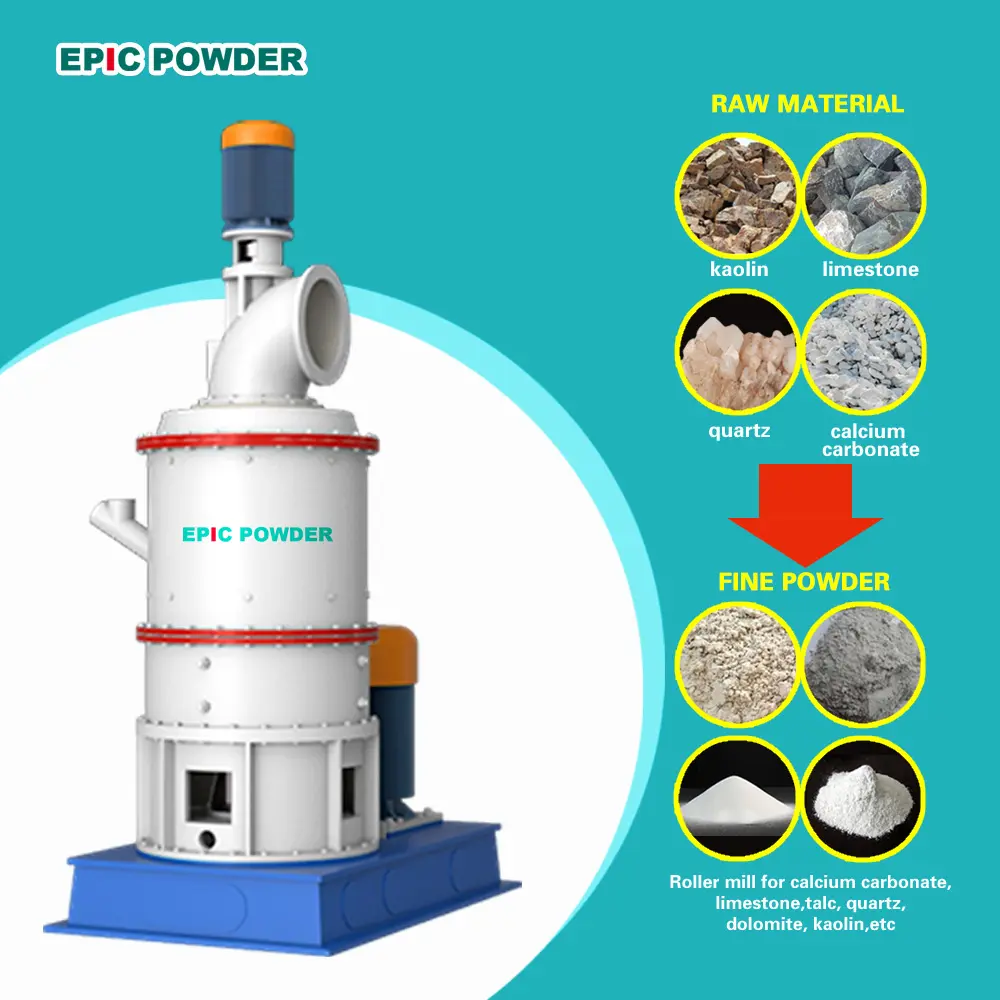
At Epic Powder, we specialize in ultrafine grinding technology. Our SRM series ring roller mill is designed specifically for non-metallic minerals like barite, calcite, limestone, talc, and dolomite. Unlike conventional mills, the SRM roller mill combines grinding and classifying in one compact unit. It uses multiple layers of grinding rollers and rings to crush, grind, and mill materials efficiently through impact, extrusion, and shearing forces. One of the key advantages of the SRM roller mill is its ability to produce barite powder ranging from 325 mesh to 2500 mesh in a single pass, with finished product fineness reaching D97 ≤ 5μm. This means you do not need multiple pieces of equipment to achieve ultrafine powder. Whether your market demands standard drilling-grade powder or high-value ultrafine powder for paints and plastics, one machine can handle it all. This versatility allows you to adapt to changing market conditions and pursue higher-value opportunities.
At the same fineness, the SRM ring roller mill offers higher production efficiency and lower energy consumption compared to ball mills, impact mills, jet mills, and stirring mills. This directly translates to lower operating costs and better profitability over the life of the equipment. For the same production capacity, the SRM roller mill also requires less initial capital investment than other mill types. The investment recovery period is shorter, so you can start seeing returns sooner.
Easy Installment
Installation is another area where the SRM mill stands out. The equipment does not require a multi-layer steel structure platform or large-scale civil works. It is delivered pre-assembled and can be installed quickly on a simple foundation. Once installed, it can go into production immediately, saving you time and construction costs. This is especially valuable for operations with limited space or those looking to start production as quickly as possible. The grinding rollers and rings are made from high-hardness, wear-resistant materials, which ensures long service life and reliable, uninterrupted operation. Fewer replacements mean less downtime and lower maintenance costs, allowing you to maintain consistent production schedules. The entire SRM system operates under negative pressure, and a high-efficiency dust collector with up to 99.9 percent efficiency ensures that no dust escapes into the workshop. This helps you meet strict environmental standards and creates a cleaner, safer workplace for your employees.
The Complete Barite Grinding Production Line
A full barite grinding production line typically consists of four core stages: crushing, grinding, classifying, and collection. Each stage requires specific equipment to ensure efficient processing and high-quality final product. The table below outlines the main equipment configuration for each stage.
| Process Stage | Core Equipment | Main Function |
|---|---|---|
| Raw Material Pre-processing | Jaw Crusher, Cone Crusher/Impact Crusher, Vibrating Screen | Crushes large raw ore into uniformly sized small particles (typically ≤20mm) to prepare for grinding. |
| Grinding | Raymond Mill, High-Pressure Mill, Ring Roller Mill, Ultrafine Vertical Roller Mill, etc. | The core stage that grinds the crushed material into powder of the required fineness. |
| Classifying | Air Classifier | Screens the ground powder, separating finished products that meet the fineness requirements, while returning coarse powder to the mill for further grinding. |
| Collection & Packaging | Pulse Dust Collector, Screw Conveyor, Automatic Packing Machine | Efficiently collects finished powder, purifies exhaust gas, and stores and packages the final product. |
The specific equipment chosen for each stage can be customized based on your raw material characteristics and final product requirements. For example, if the raw ore has high moisture content above 5 percent, a drying process may be added after crushing. If whiteness and purity are critical for your target market, additional steps such as iron removal and mineral processing can be incorporated to enhance the final product quality.
How to Choose the Right Barite Grinding Mill
When selecting a grinding mill for barite, there are three main factors to consider. The first is your target market and the required fineness. If you are supplying drilling mud or construction fillers, 200 to 325 mesh powder is sufficient. A standard Raymond mill or high-pressure mill may work, but the SRM roller mill offers better efficiency and flexibility for future upgrades. If you plan to enter premium coatings, plastics, or medical-grade markets, you need ultrafine powder of 1250 mesh and above. The SRM roller mill is specifically designed for this purpose and can help you capture higher margins.
The second factor is production capacity. You should choose a model that matches your required hourly output. The SRM 800 is ideal for small to medium-scale production, while the SRM 1000 and larger models support higher volumes. It is important to consider both your current needs and potential future growth when selecting a model.
The third factor is investment and operating costs. Look beyond the initial purchase price and consider energy consumption, maintenance costs, and ease of installation. To help you compare, the table below summarizes the features of three mainstream grinding equipment types commonly used for barite and other non-metallic minerals.
Three Mainstream Grinding Equipments
| Equipment Type | Suitable Fineness Range | Typical Capacity (t/h) | Advantages & Application Scenarios |
|---|---|---|---|
| Raymond Mill / High-Pressure Mill | 80 – 800 mesh | 1 – 55 | Economical and practical, with mature technology and low initial investment. Suitable for medium-fineness, medium-scale production in fields like building materials and general fillers. |
| Ring Roller Mill | 325 – 2500 mesh (5-45μm) | 1 – 22 | Expert in ultrafine powder, capable of producing high-fineness products in a single pass. Features special wear-resistant steel for grinding rolls and rings, offering longer service life. Suitable for processing high-value-added ultrafine powders. |
| Ultrafine Vertical Roller Mill | 3 – 45μm | 1 – 40 | Highly efficient and energy-saving, with high single-unit capacity, low overall power consumption, high automation, and uniform finished product particle size distribution. An ideal choice for large-scale, intensive production of high-end ultrafine powders. |
As the table shows, the ring roller mill occupies a unique position in the market. It offers the ability to produce ultrafine powder without the high capital investment and energy consumption associated with ultrafine vertical roller mills, while providing better product quality and flexibility than traditional Raymond mills.
SRM Roller Mill Models for Barite Grinding
Epic Powder currently offers two main models that are ideal for barite processing. The SRM 800 has a production capacity of 0.5 to 4.0 tons per hour, while the SRM 1000 has a capacity of 1.0 to 8.0 tons per hour. Both models can produce powder fineness from 325 mesh to 2500 mesh, giving you the flexibility to serve different market segments. For larger capacities, we also offer the SRM 1250 and SRM 1680 models. Our engineering team can help you select the right model based on your target fineness, hourly output requirements, and specific raw material characteristics.
Conclusion
Barite is a valuable mineral with diverse applications across drilling, paints, plastics, medical, and chemical industries. To succeed in the barite powder market, you need grinding equipment that is efficient, reliable, and adaptable. The SRM ring roller mill from Epic Powder offers a superior solution. With its ability to produce ultrafine powder in one step, lower energy consumption, fast installation, and environmentally friendly operation, it is the ideal choice for barite processors looking to maximize profitability.
Whether you are just starting your barite processing operation or planning to upgrade your existing line, our team is here to help. Our engineers can provide a customized solution based on your fineness requirements, capacity goals, and investment budget. Contact Epic Powder today to discuss your project and learn how the SRM ring roller mill can help you achieve better results.
Epic Powder
Epic Powder, 20+ years of experience in the ultrafine powder industry. Actively promote the future development of ultra-fine powder, focusing on crushing, grinding, classifying and modification process of ultra-fine powder. Contact us for a free consultation and customized solutions! Our expert team is dedicated to providing high-quality products and services to maximize the value of your powder processing. Epic Powder—Your Trusted Powder Processing Expert!

“Thanks for reading. I hope my article helps. Please leave a comment down below. You may also contact EPIC Powder online customer representative Zelda for any further inquiries.”
— Jason Wang, Engineer