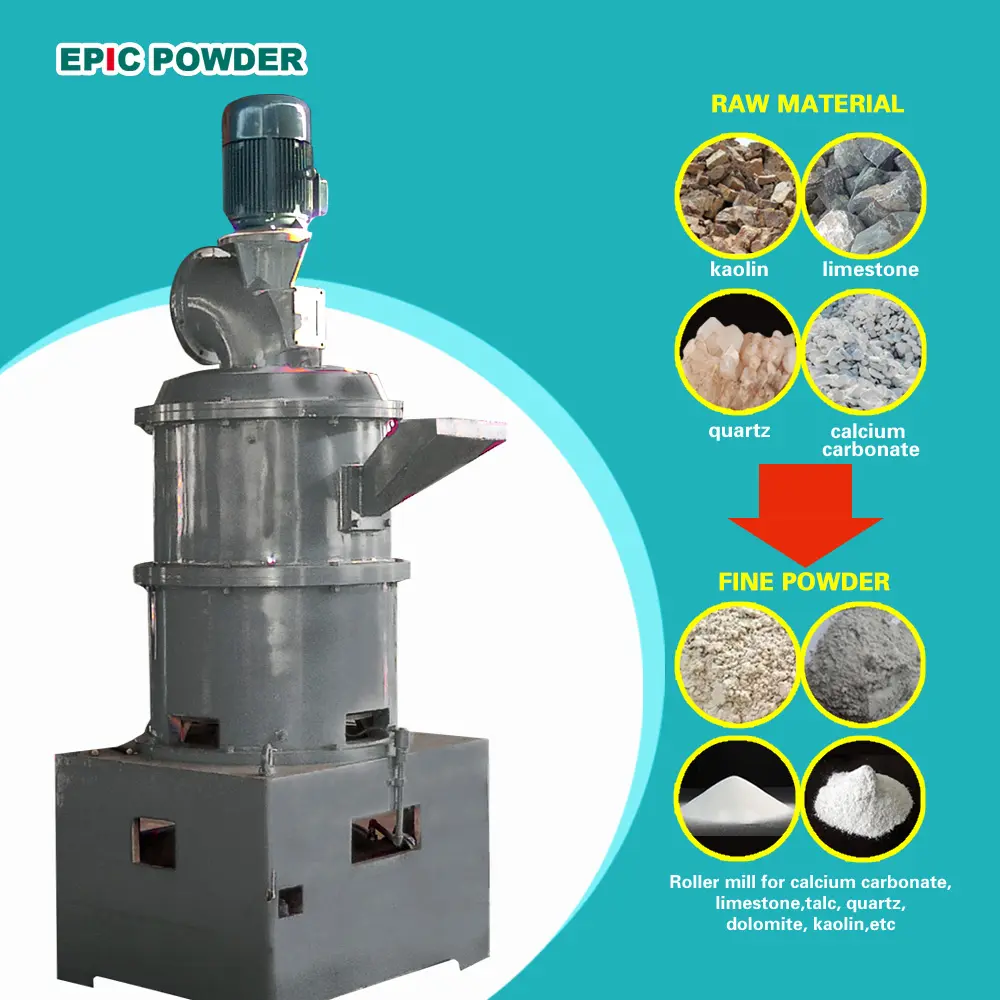
How to Choose a Ring Roller Mill for Filler Processing
A ring roller mill grinds mid-size and ultra-fine mineral powder inside one compact, vertical machine. For a filler producer, the buying decision rarely turns on a single feature. It turns on three numbers: the fineness the filler has to reach, the tonnage the plant runs each hour, and the power the machine draws to deliver both. This guide works through those three numbers, then shows how the SRM800 and the SRM1000 line up against real filler jobs.
Calcium carbonate, talc, and dolomite are the fillers most often run through these machines, on their way to paints, plastics, paper, and rubber. Each one surfaces in the finished product as a fine powder that must hold a tight particle size, batch after batch. The mill choice decides whether that size stays stable, and that makes the decision worth more than a glance at a price list.
What a Ring Roller Mill Does
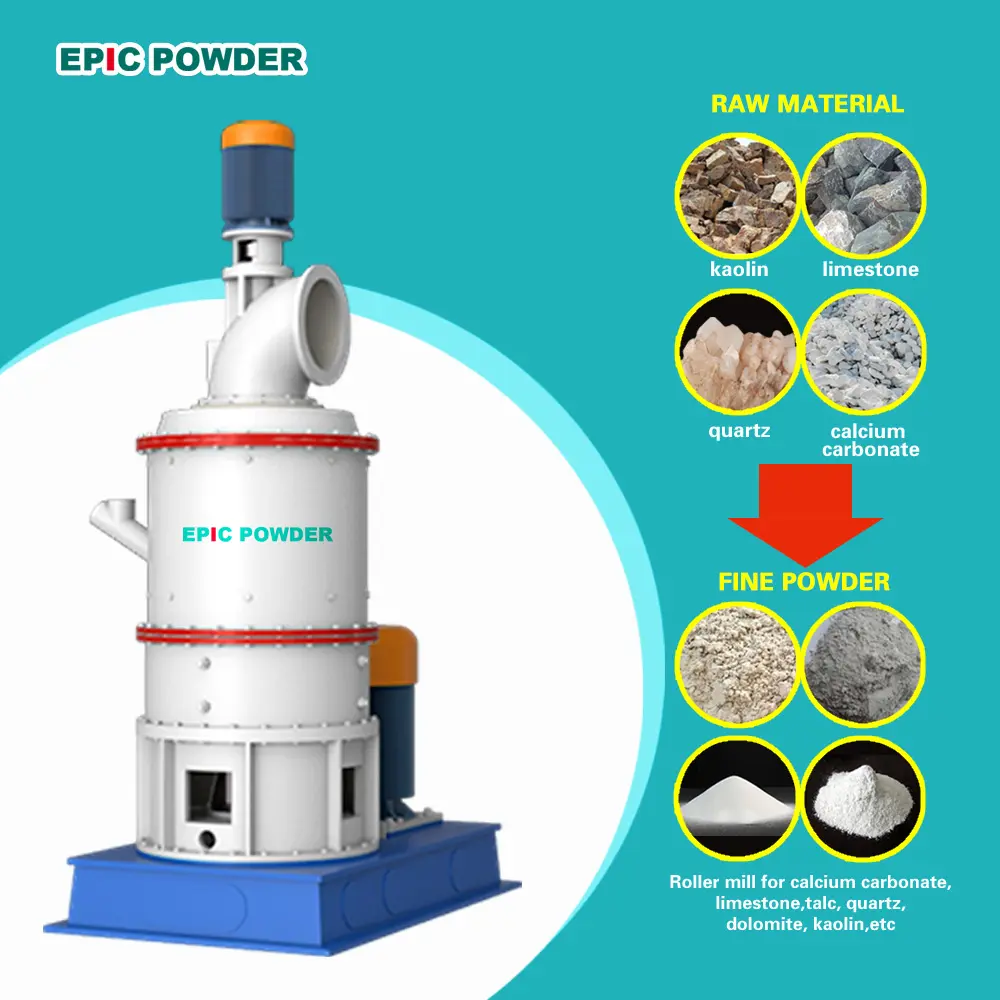
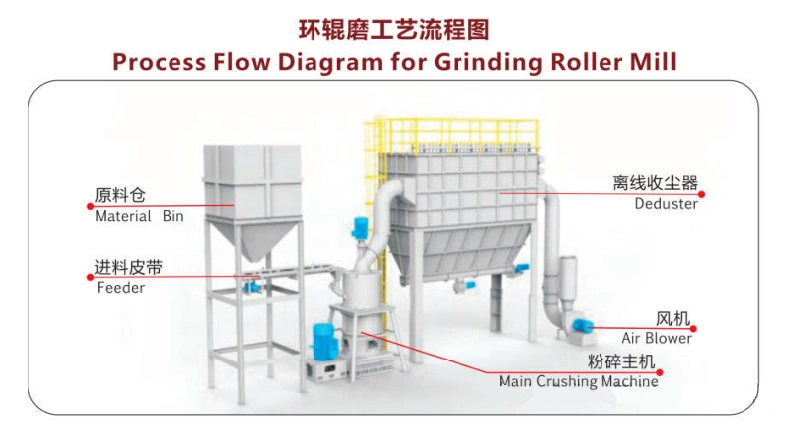
A ring roller mill grinds through impact, extrusion, and grinding working together. The machine carries several layers of grinding rollers and grinding rings stacked vertically. Feed drops between the top roller and its ring, where pressure and friction crush the particles. Centrifugal force then throws the powder against the rings and up into the machine.
A built-in classifier does the other half of the work in the same housing. It holds the coarse particles inside for another pass and lets only powder at the target size leave as finished product. Grinding and classifying in one machine keeps the footprint small and the size steady. A separate mill-and-classifier line reaches the same result, but with more equipment, more floor space, and more piping to maintain.
Because the classifier sits on top of the grinding zone, the machine recirculates air and powder in a closed loop. That keeps dust inside the system and energy inside the circuit, which matters when a plant runs twenty hours a day on a filler line with tight margins.
Compared with a ball mill, which grinds by tumbling heavy media in a rotating drum, the ring roller mill reaches fine sizes without a drum full of steel balls. Compared with an older Raymond-style mill, it carries the classifier inside the body rather than hanging a separate one outside. Both differences land in the same places a filler producer cares about: a smaller footprint, a steadier cut, and fewer auxiliary parts.
Why Fillers Suit a Ring Roller Mill
Calcium carbonate, talc, and dolomite share three traits that make them a natural fit. All three are soft to mid-hard minerals, so roller pressure breaks them without the heat build-up a harder ore causes. All three sell on a narrow, repeatable particle size, which the built-in classifier provides. And all three move in high volume, which a continuous vertical machine handles without adding a second line.
The feed window helps too. The mill accepts stone below 10–20 mm and below 5% moisture, limits that once-crushed quarry stone clears with ease. Wetter or oversized feed cuts capacity and can plug the classifier, so the condition of the feed matters as much as the mill that receives it.
First Decision: The Fineness You Must Reach
Filler buyers state size two ways. Mesh is the sieve number, and D97 is the diameter that 97 percent of the powder falls below. The SRM series produces 325 to 2500 mesh, a window that runs from roughly 45 micrometers down to about 5 micrometers. A finer powder is not automatically better. The correct fineness is the one the downstream application actually needs.
Paints and coatings take the finest powder, so the film stays smooth and the hiding power stays high. Plastics such as PVC settle in a middle band, where the powder must disperse evenly without making the compound too costly. Paper coating and filler grades occupy a wide middle-to-fine band. Rubber filler can afford to run coarser, because a little roughness does not hurt the compound. The classifier setting, not the mill body, chooses where the machine lands inside the 325–2500 window.
For fillers, the D97 carries more weight than the average size. A batch whose average is correct but whose coarse tail runs long will scratch a paint film and leave lumps in a polymer melt. The built-in classifier trims that top end on every pass, and that control is exactly what a filler line depends on.
Second Decision: The Tonnage You Run
Size the mill to the steady-state rate, not the peak. The SRM800 delivers 0.5 to 4.0 metric tons per hour. The SRM1000 delivers 1.0 to 8.0 tons per hour. Both models hold the same 325–2500 mesh range, so throughput is the number that actually separates them.
A plant that runs 3.5 tons per hour around the clock belongs on the SRM1000 rather than an SRM800 pushed to its top end. Running any mill flat out shortens the rollers and rings and raises the energy cost per ton, because the machine spends more time near its mechanical limit. Leave headroom, and the mill runs cooler, wears slower, and holds its size longer between checks.
Third Decision: Installed Power and Energy per Ton
Three motors draw power on a ring roller mill. The mill motor does the crushing, the classifier motor drives the sizing wheel, and the fan motor moves the air that carries powder through the circuit. The nameplate numbers state what the machine can absorb. The kilowatt-hours per ton state what it actually costs, and that second figure is the one sitting on the operating budget.
The SRM800 carries a 75 kW mill motor, a 15–18.5 kW classifier motor, and a 37–45 kW fan motor. The SRM1000 steps up to a 132 kW mill motor, a 22–30 kW classifier motor, and a 55–75 kW fan motor. Fine cuts cost more energy, because the machine moves more air and holds a tighter size. The same mill uses more power per ton at 2500 mesh than at 800 mesh, and the classifier and fan shoulder most of that increase.
Adding the three motors, the SRM800 tops out near 140 kW of installed drive power, and the SRM1000 near 240 kW. The larger machine draws more nameplate power but spreads it over a larger output, so the energy per ton can come in lower on the bigger model at the same fineness.
Rollers and rings are the wear items, and they follow a schedule rather than a surprise. A mill that runs at a comfortable fraction of its capacity spreads the same wear over more hours per ton. That lowers the cost of replacement parts and keeps the size on target between change-outs, two outcomes that show up directly on a filler line’s profit.
Reading the SRM800 and the SRM1000
| Parameter | SRM800 | SRM1000 |
| Feed Size (mm) | < 10–20 | < 10–20 |
| Moisture (%) | < 5 | < 5 |
| Mill Motor (kW) | 75 | 132 |
| Classifier Motor (kW) | 15-18.5 | 22–30 |
| Fan Motor (kW) | 37-45 | 55-75 |
| Product Fineness (mesh) | 325–2500 | 325–2500 |
| Production Capacity (t/h) | 0.5–4.0 | 1.0–8.0 |
Two numbers perform most of the selection. A plant that stays inside 4 tons per hour takes the SRM800, the smaller and lower-power fit. A plant that runs 4 to 8 tons per hour takes the SRM1000. Fineness never splits the two models, because both span the same window. Capacity and duty cycle make the call.
Filler-by-Filler Sizing Notes
Calcium carbonate, usually ground limestone, is the largest filler by volume. A 1250-mesh product of about 10 micrometers covers most PVC and paper filler work, and both models reach it comfortably. Top-coat grades near 2500 mesh, about 5 micrometers, lean hard on the classifier and fan, so a high-mesh carbonate plant should size its power for the fine end rather than the coarse end.
Coatings put the hardest demand on the top end. A film only a few micrometers thick shows every coarse grain as a defect, so paint-grade calcium carbonate and talc usually spec a D97 below 10 micrometers. The fine end of the SRM range, 1250 to 2500 mesh, is where those coating grades live, and it is the reason the classifier and fan motors are worth matching to the target rather than under-sizing.
Talc grinds easily but loses value if it is over-ground, because its flat plate structure is what makes it reinforce and anti-block in plastics and rubber. The short residence time of a ring roller mill helps keep those plates intact. A talc producer wants the target size without crushing the lamellarity out of the mineral.
Dolomite is a step harder than calcite and trades as a lower-cost extender in coatings and plastics. It grinds cleanly on the same machine, and because it shares the same feed and moisture limits, a plant already running calcium carbonate can switch to dolomite on the same line with no change of equipment.
What to Check Before You Buy
· Feed size below 10–20 mm, with oversize quarry stone pre-crushed before it reaches the mill.
· Moisture below 5 percent, since wet feed reduces capacity and can clog the classifier.
· The full size distribution, not the average alone, because a filler fails on its coarse tail.
· Access to the rollers and rings, the wear parts replaced on a fixed schedule.
· A grinding trial on your own material, not a borrowed sample, before the order.
Epic Powder builds the SRM800 and SRM1000 ring roller mills for filler producers and grinds a sample of your material before quoting. That trial sets the target mesh, the capacity, and the power draw against your real feedstock instead of a printed data sheet.
Epic Powder
Epic Powder designs grinding and classifying systems for minerals, chemicals, food, and pharmaceuticals. With more than 20 years of powder processing experience, we match the right mill to your target particle size and capacity. Tell us about your material and we will recommend a tested solution.
Related reading: Roller mills for industrial fillers: grinding calcium carbonate, talc, and dolomite for coatings, plastics, and paper.
Match the ring roller mill to your filler line
Contact the teamSpecifications listed above are the SRM800 and SRM1000 nameplate values from Epic Powder Machinery and may vary slightly with configuration. Confirm final targets with the engineering team.

“Thanks for reading. I hope my article helps. Please leave a comment down below. You may also contact EPIC Powder online customer representative Zelda for any further inquiries.”
— Jason Wang, Engineer