Roller Mills for Industrial Fillers: Grinding Calcium Carbonate, Talc, and Dolomite for Coatings, Plastics, and Paper
Industrial fillers cut material costs and improve finished-product performance. Calcium carbonate, talc, and dolomite are the three most widely used mineral fillers in coatings, plastics, and paper. Roller mills grind these minerals to the exact particle sizes each application requires.
The global calcium carbonate market was valued at USD 52.24 billion in 2024 and is projected to reach USD 89.77 billion by 2033, growing at a CAGR of 6.20%. Paper and pulp held the largest application share at 42%. Ground calcium carbonate leads product demand with roughly 68% market share.
Calcium Carbonate: The Dominant Filler
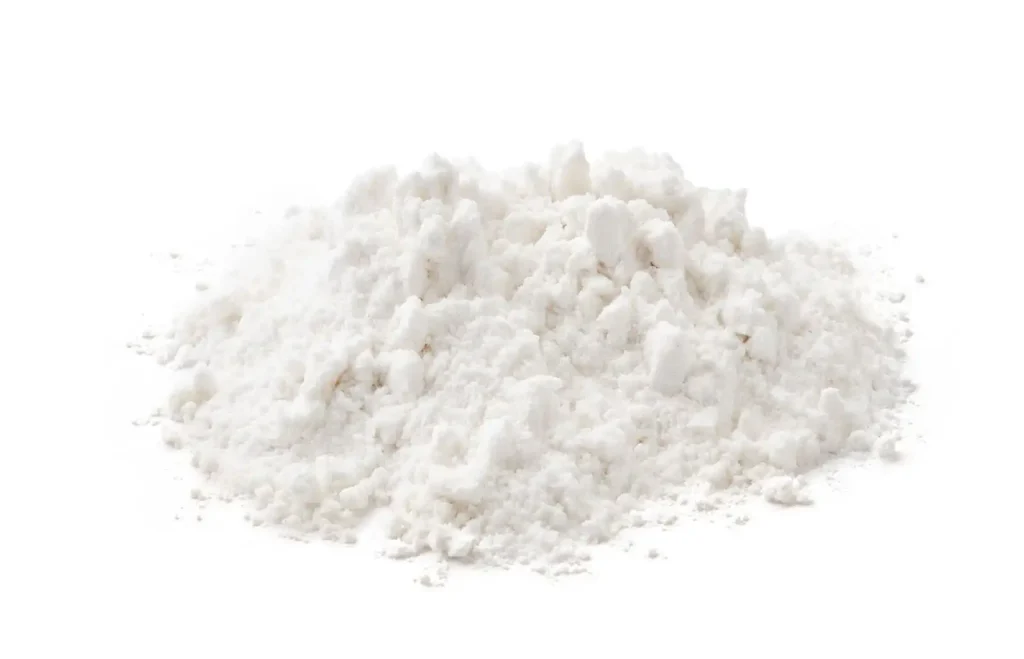
Calcium carbonate dominates filler use across all three industries. Paper mills add it to increase brightness, opacity, and bulk while replacing more expensive wood fiber. Plastic compounders mix it into polypropylene and PVC to raise stiffness and reduce resin content. Paint formulators choose fine grades to control gloss, hiding power, and rheology.
Filler grades differ by particle size. Coarse ground calcium carbonate runs D50 10–75 μm and D97 50–200 μm, suitable for construction and general compounding. Fine grades run D50 3–10 μm and D97 10–30 μm, matching plastics, rubber, and adhesives. A practical mesh-to-micron conversion puts 325 mesh at about 45 μm, 800 mesh at 18 μm, 1250 mesh at 10 μm, and 2000 mesh at 6.5 μm.
Talc: Platy Particles for Reinforcement
Talc performs differently from calcium carbonate. Its platy particles reinforce plastics and improve dimensional stability. Manufacturers use 600–1250 mesh talc for plastic masterbatch and 1000–2000 mesh for coatings. High-performance paper coatings need 800 mesh or finer, below 20 μm.
Dolomite: Hardness and Weather Resistance
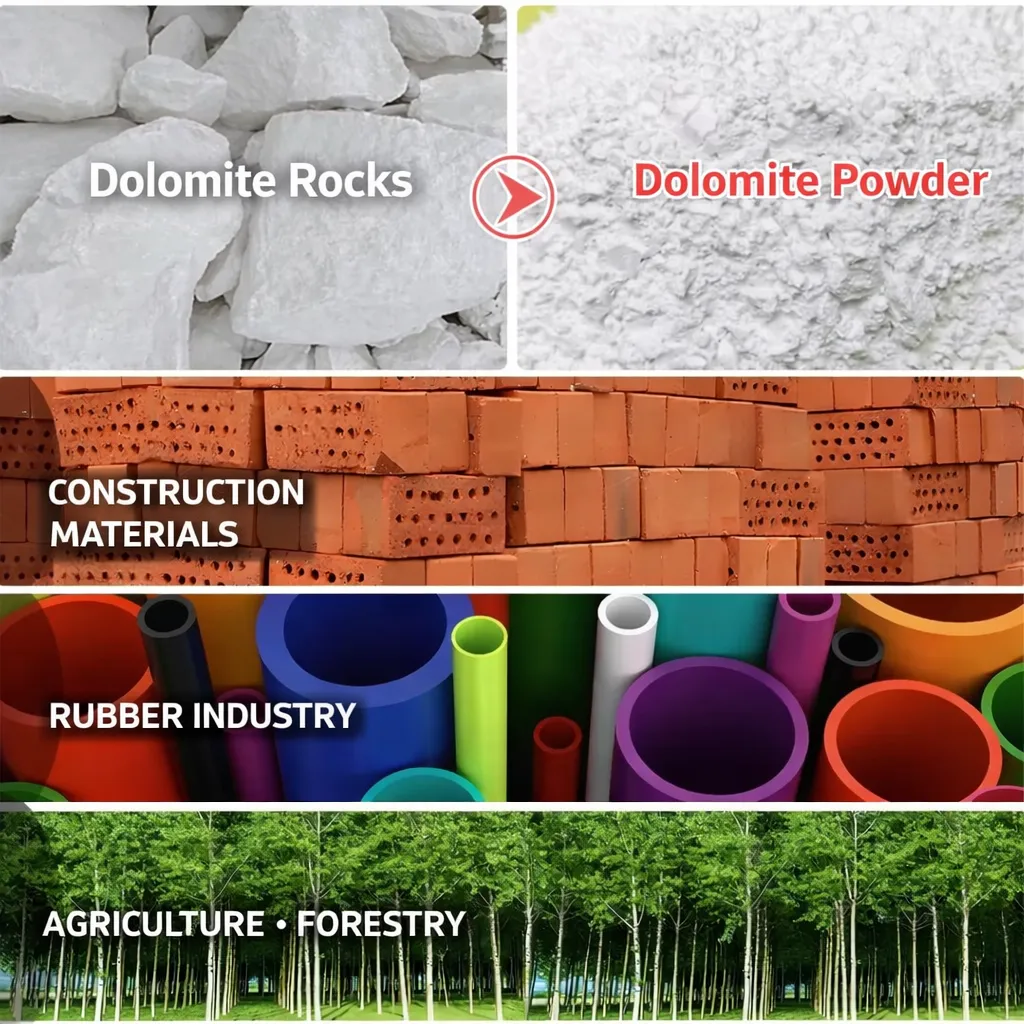
Dolomite adds hardness and weather resistance to exterior coatings. Paint producers use it as both filler and pigment extender. One formulation study reported that 15% dolomite filler reduced pigment usage by 12% while maintaining opacity above 85%.
Why Roller Mills Fit Filler Production
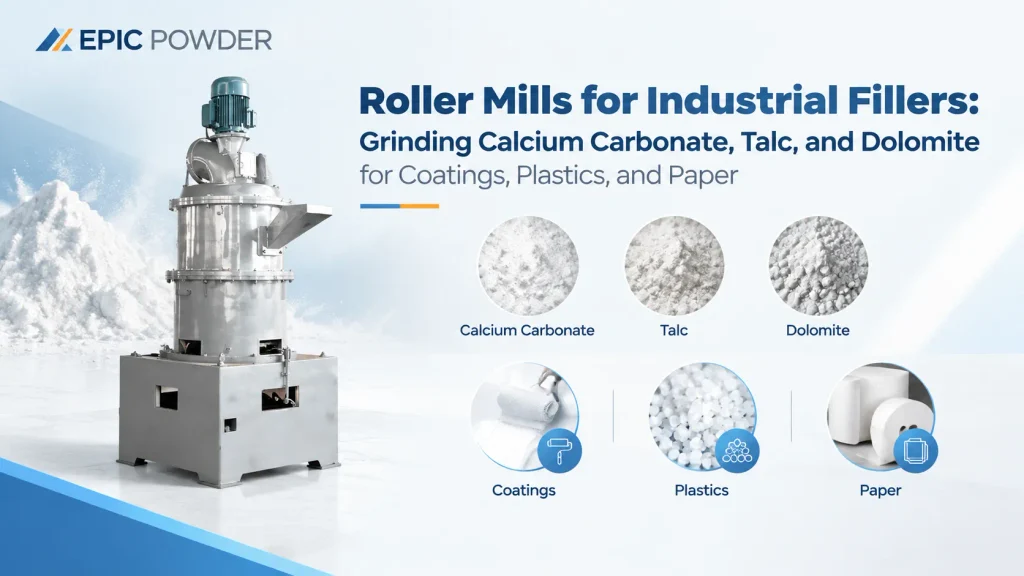
Roller mills suit these minerals because they crush brittle material by compression. A vertical roller mill integrates grinding, drying, and classification in one housing. Material feeds onto a rotating table, rollers press it against the table, and a separator returns oversized particles for regrinding.
Energy efficiency separates roller mills from older ball-mill circuits. Ball mills commonly consume 33–42 kWh per ton for finish grinding. Vertical roller mills reach comparable fineness at roughly 20–30 kWh per ton. For a plant processing tens of thousands of tons per year, that gap determines operating cost.
One mill can produce several filler grades by changing roller pressure, separator speed, airflow, and roller profile. Operators shift from coarse construction filler to fine plastics-grade product without replacing the machine. Premium paper coatings require finer control, with some specifications calling for D90 below 2 μm.
Coatings Industry Requirements
The coatings industry needs narrow particle distribution and a tight top size. Coarse particles leave defects in thin paint films. Fine calcium carbonate and dolomite improve opacity, scrub resistance, and flow. Paints consumed about 22% of ground calcium carbonate supply in 2024, roughly 35–40 million metric tons.
Plastics Industry Requirements
Plastic compounders need fillers that disperse evenly and do not degrade during extrusion. Talc and calcium carbonate grades for masterbatch typically span 325 mesh to 1250 mesh. Consistent particle size prevents screw slip, die buildup, and weak spots in molded parts.
Paper Industry Requirements
Paper mills use fillers to improve brightness, opacity, and printability. Coated papers require finer grades than uncoated papers. A narrow particle-size distribution prevents sedimentation in coating color and keeps coating weight uniform across the roll.
Selecting the Right Roller Mill
Equipment selection depends on feed hardness, target fineness, moisture, and capacity. Dolomite is harder than calcium carbonate and talc, so it needs higher grinding force. High-moisture feed benefits from the integrated drying in vertical roller mills. High-capacity lines favor vertical roller mill layouts over separate grinding and classifying circuits.
Calcium carbonate, talc, and dolomite each fill a distinct role in coatings, plastics, and paper. Roller mills remain the standard equipment for producing these fillers at commercial scale. The right mill settings decide whether the powder meets the end-use specification.
Epic Poweder
Epic Powder Machinery designs and manufactures powder processing equipment for minerals, chemicals, battery materials, and other industrial applications. The product range includes ball mill and air classifier production lines, jet mills, impact mills, and air classifiers. Our team has more than 20 years experience in various powders processing. We supply both single machines and integrated grinding-classification systems, with engineering support for layout, commissioning, and after-sales service.

“Thanks for reading. I hope my article helps. Please leave a comment down below.
You may also contact EPIC Powder online customer representative Zelda for any further inquiries.”
— Jason Wang, Engineer